
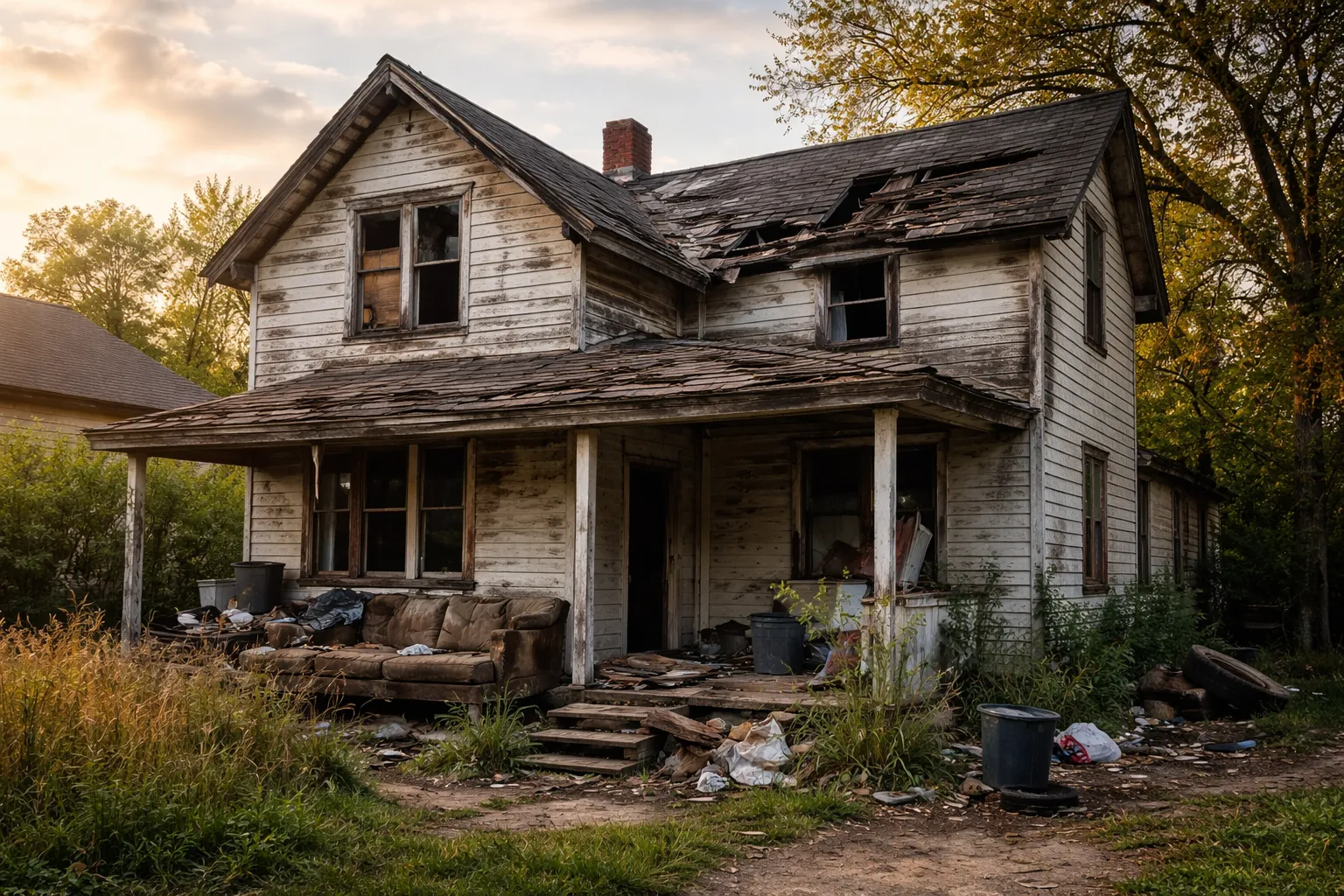
When a tenant destroys a rental property, it can feel like everything is on the line at once: your mortgage, your cash flow, and your ability to sell a rental home without taking a major loss. In addition to stress and repairs, you may be dealing with missed rent, lease violations, and questions about what you can legally do next. This guide covers practical landlord rights, documentation steps, and realistic options for protecting your rental investment, including when it makes sense to sell a rental property as-is.
Landlord Rights When Tenant Destroys Property
Property damage can range from minor wear to serious destruction like broken doors, holes in walls, plumbing damage, mold from negligence, or unauthorized alterations. If the damage goes beyond normal wear and tear, landlords typically have rights under the lease and state law to recover costs and enforce the terms of the agreement. The key is to stay organized, document everything, and avoid actions that could create legal issues.
Step 1: Document the Damage and Build a Clear Paper Trail
If you plan to pursue reimbursement, file an insurance claim, start eviction for lease violations, or sell a rental home with damage, documentation is your foundation. Keep your records consistent and time-stamped.
What to gather right away
- Photos and videos from multiple angles, including close-ups and wide shots
- Move-in checklist, prior inspection notes, and dated maintenance requests
- Written tenant communications (texts, emails, letters) related to the issue
- Contractor estimates and invoices for repairs or cleanup
- Police report number if vandalism, threats, or illegal activity occurred
Step 2: Review the Lease Terms and Identify Violations
Most leases include clauses requiring the tenant to keep the property in good condition, report issues promptly, and avoid intentional damage. If the tenant caused major damage, you may have grounds to issue a notice to cure, a notice to quit, or another notice type required in your area. Be careful not to guess the correct notice format. If you are unsure, talk with a local attorney or a property management professional.
If the situation also involves access issues, repeated problems, or serious noncompliance, you may want to compare options for selling a home with bad tenants to reduce risk and move on.
Step 3: Security Deposits, Repairs, and Cost Recovery
In many cases, a security deposit can be applied toward damage beyond normal wear and tear. Landlord rights vary by state, but deposits often require itemized statements and specific deadlines. If the damage is extensive and the deposit will not cover it, you may consider pursuing reimbursement through legal channels. This can include small claims court depending on the amount and local limits.
What helps you recover costs
Clear before-and-after photos, a signed move-in condition report, and repair estimates make it easier to justify charges and respond to disputes.
Avoid missteps
Do not change locks, shut off utilities, or remove a tenant’s belongings without following proper legal steps. Improper actions can create serious liability.
When It Makes Sense to Sell a Rental Home After Major Damage
Sometimes the repair burden is not worth it, especially if the rental home already needed updates or you have had ongoing tenant problems. If you are thinking, “I need to sell my rental property fast,” you are not alone. Many landlords choose to sell a rental home as-is so they can avoid months of repairs, repeated inspections, and the uncertainty of finding a new tenant or managing another lease cycle.
If the property is in rough shape, you can explore options to sell a house as is and reduce the time and money you put into the home before selling.
Selling a Rental Property With Damage in Ventura County and Nearby Areas
Landlords in Southern California often want a clear path forward, especially when the property damage creates financial pressure. If you are considering selling, Friendly Offer can help homeowners and landlords looking to sell a rental home in the area, including:
- sell my house fast in Ventura CA if you need a faster solution
- we buy houses Agoura Hills CA for landlords dealing with difficult rentals
- we buy houses Thousand Oaks CA if you want to avoid repairs and relisting
- we buy houses Simi Valley CA when a rental property needs major cleanup
What to Do Next If a Tenant Destroyed Your Property
If you are dealing with serious damage, start with documentation and legal compliance, then choose the path that best protects your finances. In some cases, pursuing reimbursement and making repairs is worth it. In other situations, selling the rental home is the cleanest way to stop the losses and move on.
If you want to discuss a straightforward option, you can reach Friendly Offer through our contact us page or call (805) 422-7049.
Frequently Asked Questions
What qualifies as damage beyond normal wear and tear?
Normal wear and tear is gradual deterioration from ordinary use, like minor scuffs or light carpet traffic. Damage beyond normal wear and tear includes intentional destruction, broken fixtures, holes in walls, pet damage, missing appliances, or severe neglect that causes mold or water damage.
Can a landlord charge the tenant for repairs?
In many cases, yes, especially when the damage goes beyond normal wear and tear. The lease, state rules, and security deposit laws typically determine how charges must be documented and what deadlines apply for providing an itemized statement.
Can I evict a tenant for destroying the property?
Property destruction is often a lease violation and may be grounds for eviction, but the required notices and timelines depend on your jurisdiction. Consider legal guidance to make sure you follow the correct process and avoid delays.
What if the security deposit does not cover the damage?
If repair costs exceed the deposit, landlords sometimes pursue reimbursement through legal channels. Keep detailed documentation, including photos, estimates, invoices, and communication logs, so you have support if there is a dispute.
Can I sell a tenant occupied property if it is damaged?
Yes. You can sell a rental property even if it needs repairs, but the tenant situation and damage level can affect buyer interest. Many landlords choose an as-is sale when they want to sell a rental home quickly and avoid coordinating repairs while dealing with a difficult tenant.
How do I sell a rental home fast after tenant damage?
Speed usually comes from simplifying the process: strong documentation, clear decisions about whether to repair or sell as-is, and a realistic pricing strategy. If repairs are extensive, exploring an as-is option can reduce delays and help you sell the rental property faster.
